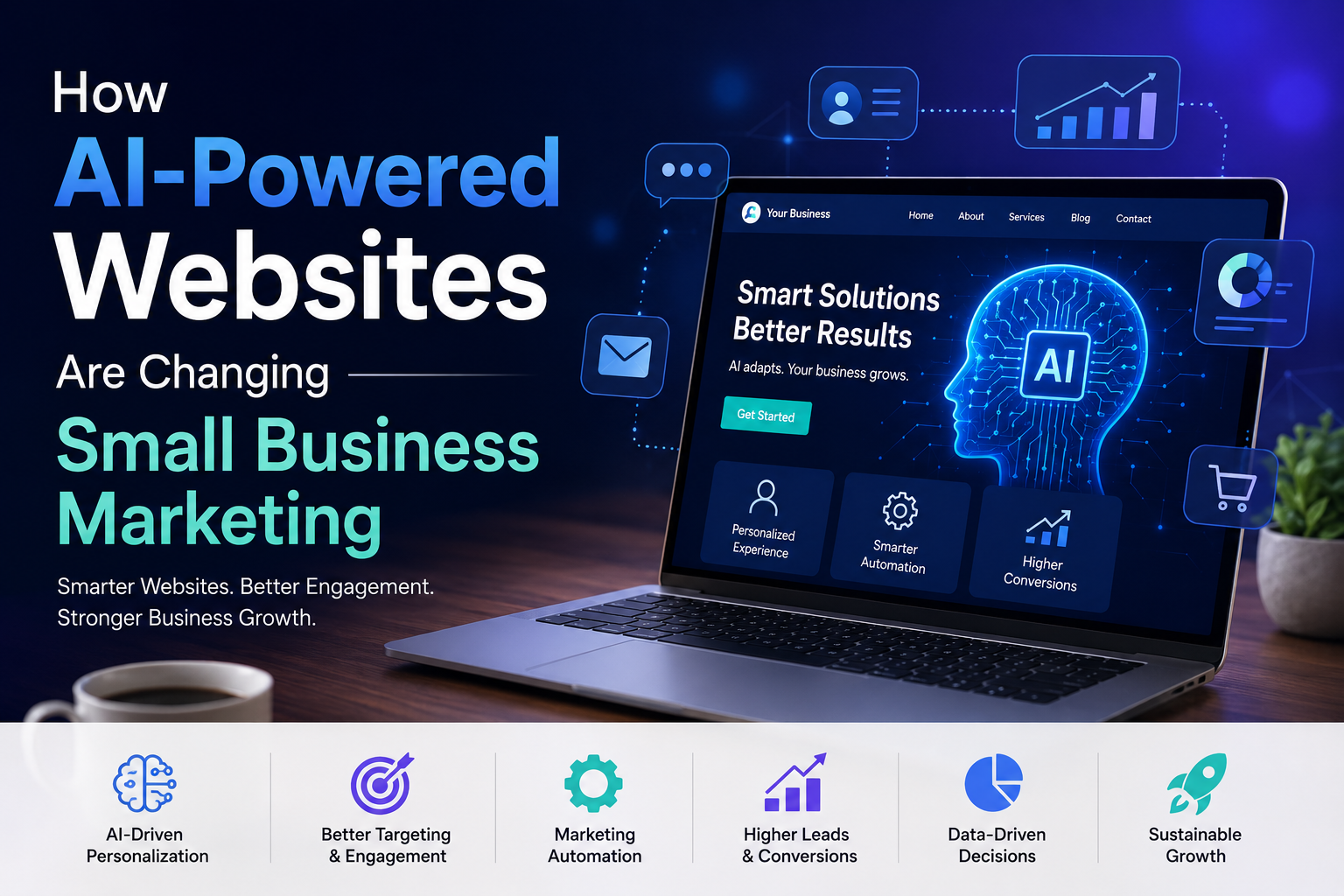
An AI-powered website uses machine learning to adjust content based on real-time user behavior. It replaces static pages with adaptive systems that respond to visitor actions across sessions.
The system collects behavioral signals such as page views and session duration metrics throughout user activity. It helps improve content relevance and optimize user engagement across digital touchpoints.
AI websites continuously enhance their performance through ongoing learning cycles based on accumulated behavioral data. Over time, system accuracy improves as interaction patterns become more structured and predictable across user sessions.
These platforms also convert behavioral insights into actionable business intelligence for marketing optimization. The blog guides small businesses in understanding how to use AI-driven websites to improve customer targeting.
Many businesses now work with a professional digital marketing agency to implement AI-powered website strategies effectively. A structured approach helps companies improve customer targeting, automate engagement, and create more scalable marketing systems across digital platforms
How AI Websites Transform Small Business Marketing Performance?
AI-powered websites improve marketing performance by combining behavioral analytics and adaptive content delivery models. These systems reduce manual operational workload and improve targeting precision.
- Personalized Customer Experience
AI systems analyze browsing behavior and interaction patterns across website sessions. Content adjusts based on these signals to improve relevance during navigation. Visitor engagement increases as users receive information aligned with their intent. Interaction quality improves across digital touchpoints through better content alignment.
- Lead Generation
AI identifies high-intent users through repeated engagement patterns and interaction frequency across website pages. These behavioral signals support lead prioritization across marketing pipelines. Marketing focus shifts toward users with higher conversion probability based on structured behavioral scoring. Resource allocation improves across digital campaigns.
- Marketing Task Automation
Email communication, follow-ups, and campaign triggers operate through automated workflows. These systems reduce dependency on manual marketing execution across business operations. Communication timing improves across customer journeys through structured automation. Engagement consistency improves across multiple digital channels.
- Data-Driven Marketing
AI systems continuously collect user behavior data across website interactions and engagement cycles. This data converts into structured insights for marketing optimization. Strategic decisions align with real behavioral patterns instead of assumptions or incomplete reporting data. Campaign performance improves through structured interpretation.
Struggling to convert traffic into real leads?
How do AI Tools Support Modern Business Website Infrastructure?
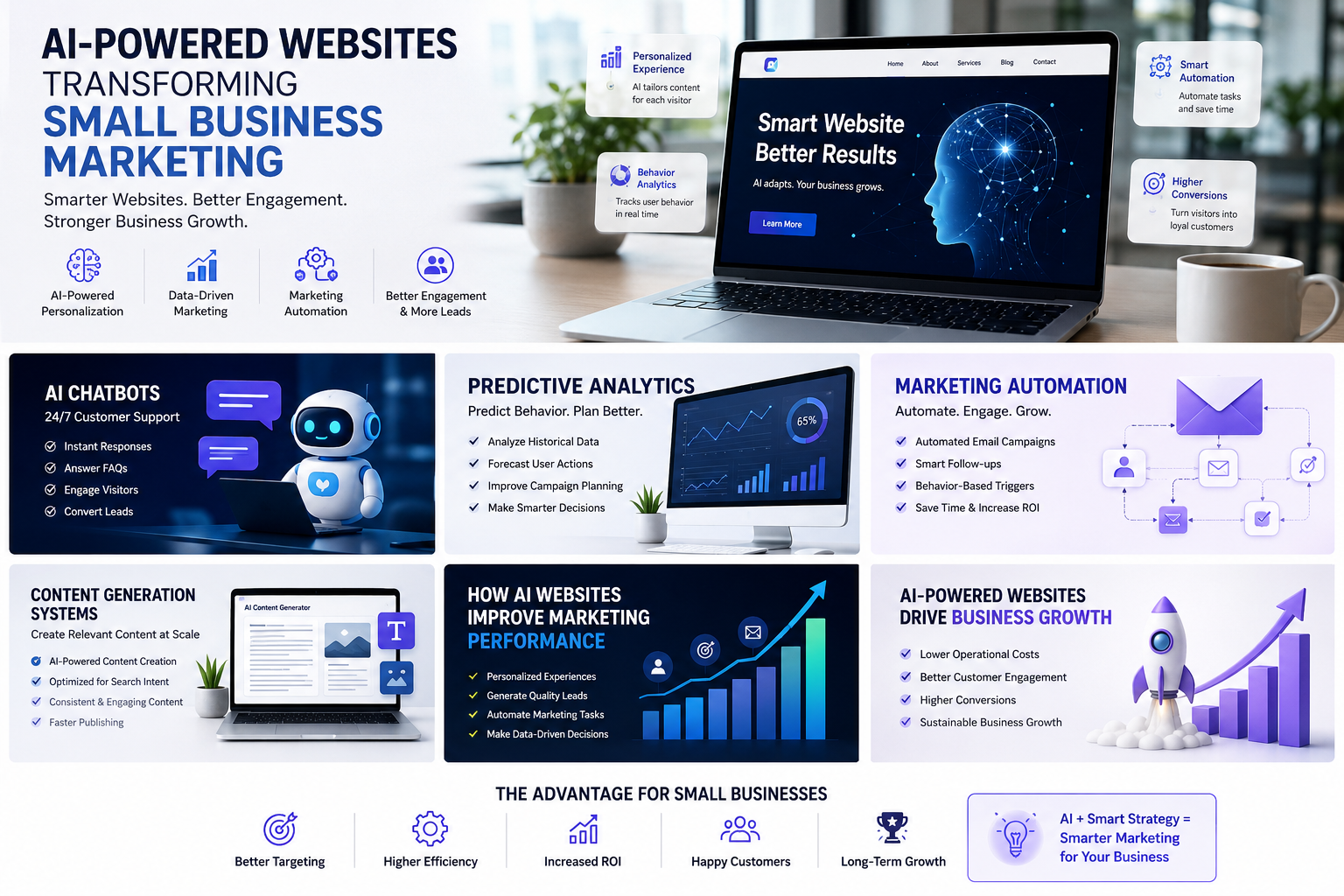
Modern AI-powered websites integrate multiple systems that manage communication, automation, analytics, and content operations. These tools operate together to improve marketing performance and digital efficiency.
- AI ChatBots
AI chat systems handle customer queries through automated response mechanisms across digital platforms. Communication remains active throughout operational hours. Support availability improves across user engagement cycles without manual intervention requirements. Response timing improves across communication channels.
- Predictive Analytics Systems
Predictive analytics systems analyze historical behavior data to forecast future user actions across digital platforms. Marketing strategies improve through behavior prediction models. Campaign planning becomes more structured through trend forecasting systems. Decision-making aligns with predicted user behavior patterns.
- Marketing Automation System
Marketing automation platforms manage email campaigns and scheduled communication workflows. Operational consistency improves across digital marketing channels. Manual coordination requirements decrease across campaign execution processes. Marketing structure becomes more organized through system automation.
- Content Generation Systems
AI content systems generate and optimize website content based on user intent and search behavior analysis. Content production speed improves across publishing workflows. Content relevance improves through alignment with search intent and behavioral data patterns.
What are the Advantages of AI-Powered Websites for Small Business Growth?
AI-powered websites provide structured improvements in marketing performance and customer engagement systems. These platforms reduce manual dependency across digital workflows.
- Cost Optimization
Automation reduces dependence on large operational teams across marketing functions. System-driven execution replaces manual marketing processes. Resource allocation improves across business operations through structured automation systems. Operational costs are reduced through system efficiency.
- Business Growth
Lead generation processes operate through automated behavioral analysis systems. Customer acquisition cycles shorten across digital engagement processes. Conversion pathways improve through structured optimization models. Business growth becomes more predictable across operational cycles.
- Enhanced Customer Engagement
Content adapts based on real-time user behavior across website interactions. Users receive relevant information throughout browsing sessions. Engagement duration increases across digital touchpoints through personalized content delivery. User retention improves through behavioral alignment.
What are the Challenges of Using AI-Driven Marketing Systems?
AI implementation improves digital performance but requires structured planning and system understanding across business operations. Adoption processes require gradual integration strategies.
- Operational Learning Requirements
AI systems require structured learning periods before full operational integration. Teams adapt to system workflows over time. Training processes improve system usability across operational environments. Workflow alignment improves gradually through usage experience.
- Data Quality Requirements
AI systems depend on structured and accurate data inputs for reliable performance outcomes. Poor data quality reduces analytical accuracy. Data structuring improves decision-making reliability across marketing systems. Insight quality improves through clean data processing.
- Initial Investment Requirements
AI system implementation requires upfront investment based on feature complexity and operational scale. Budget planning supports structured deployment. Long-term operational savings offset initial investment costs through automation benefits. System efficiency improves financial balance over time.
Conclusion
AI-powered websites transform small business marketing through structured automation, behavioral analysis, and adaptive content systems. These platforms improve engagement quality and conversion performance across digital environments.
Business operations become more predictable through structured data interpretation and system-driven workflows. Marketing performance improves through behavior-based optimization systems.
Red Minstrel Marketing supports this transformation through AI-powered website systems designed for scalable digital growth and structured marketing performance improvement across business environments.
Need AI + SEO Support Without the Huge Agency Cost?
Managing SEO, automation, content updates, and website optimization alone can get overwhelming fast. That’s why Red Minstrel Marketing offers an AI + SEO bundle for just $500/month, built for small businesses looking for smarter, simpler growth.
The package helps businesses:
- Improve SEO visibility
- Automate lead engagement
- Optimize website content
- Strengthen local search performance
- Support consistent digital growth
Instead of juggling different tools and freelancers, businesses get one streamlined system focused on traffic, visibility, and conversions.
Ready to upgrade your website into a marketing engine?
FAQs
What is an AI-powered website?
An AI-powered website operates using machine learning systems that adjust content based on user behavior across digital interactions. It tracks visitor activity and updates the structure in real time to match intent. At Red Minstrel Marketing, we use these systems to improve engagement and guide users toward more relevant experiences through adaptive content delivery.
How do AI websites support small business marketing?
AI websites help small businesses improve marketing by analyzing user behavior and refining targeting across digital touchpoints. At Red Minstrel Marketing, we use behavioral insights to personalize content and strengthen lead quality. Our systems also reduce manual marketing effort while improving how users move through different stages of the website journey.
Are AI-powered websites expensive for small businesses?
Costs depend on features, complexity, and business requirements. At Red Minstrel Marketing, we focus on building scalable solutions so our clients can start small and grow over time. Our approach helps reduce long-term marketing effort through automation, which balances initial investment with improved efficiency and better digital performance.
Can AI systems improve SEO performance?
AI improves SEO by analyzing search patterns and user intent across platforms. We at Red Minstrel Marketing use these insights to structure content that aligns with what users are searching for. Our systems also refine pages based on behavior signals, which supports stronger visibility and better ranking opportunities over time.
What tools operate within AI-powered websites?
AI-powered websites use tools like chat systems, automation engines, analytics platforms, and content optimization modules. At Red Minstrel Marketing, we integrate these tools to manage communication and support marketing decisions. Our systems work together to improve engagement and simplify operations to deliver more structured digital performance.
Author Bio :
Red Minstrel Marketing, helping businesses improve their online presence through results-focused strategies. Our expertise spans SEO, website development, local marketing, social media, advertising, and AI-powered marketing solutions designed to drive visibility, qualified leads, and business growth.
Related Post