

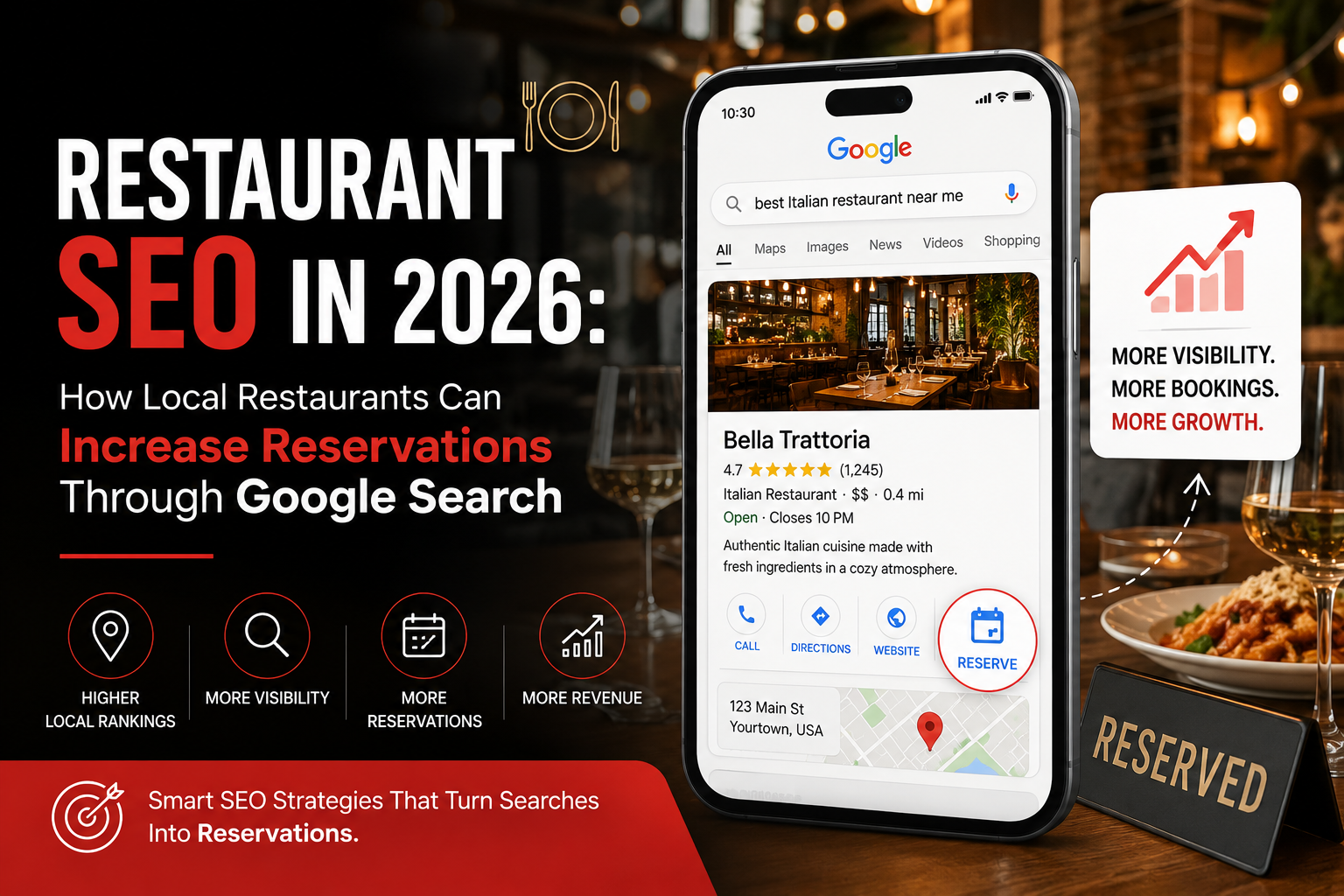
Empty tables on a Friday night aren't always an indication of food trouble. Often, they're simply a visibility problem. Someone is looking for exactly what you offer, but another restaurant pops up instead of yours. This is where local SEO for restaurants lends a hand.
In this blog, we outline the top 5 things driving restaurant discovery on Google in 2026, how to turn those searches into real reservations, and what most local owners still get wrong. Whether you run a single neighborhood spot or multiple locations, we apply these exact foundational rules to get you found.
At Red Minstrel Marketing, we specialize in helping small and medium-sized businesses cut through the online confusion. Restaurant search engine optimization is just one area where we implement the right changes to bring your business rapid, measurable results.
Why "Near Me" Searches Are Your Best Customer
Think about what someone is typing when they are actually hungry and ready to head out, like right now. It’s not a brand name, not really. It might be “Italian restaurant near me”, or “best brunch in xyz city”, or “places to eat open now” (things like that). This kind of search is one of the highest intent searches you can find online. The person isn’t just looking around. They already picked the idea, and they want to go out. They just need a real place to show up to.
Google's own data shows that 76% of people who do a local search on their phone visit a business within 24 hours. For restaurants, that's not a lead. That's a customer walking through the door today, if you show up. The problem is that a huge number of restaurants either don't appear in those results at all, or they appear with incomplete information that causes people to click somewhere else instead.
Your Google Business Profile Is Doing More Work Than You Realize
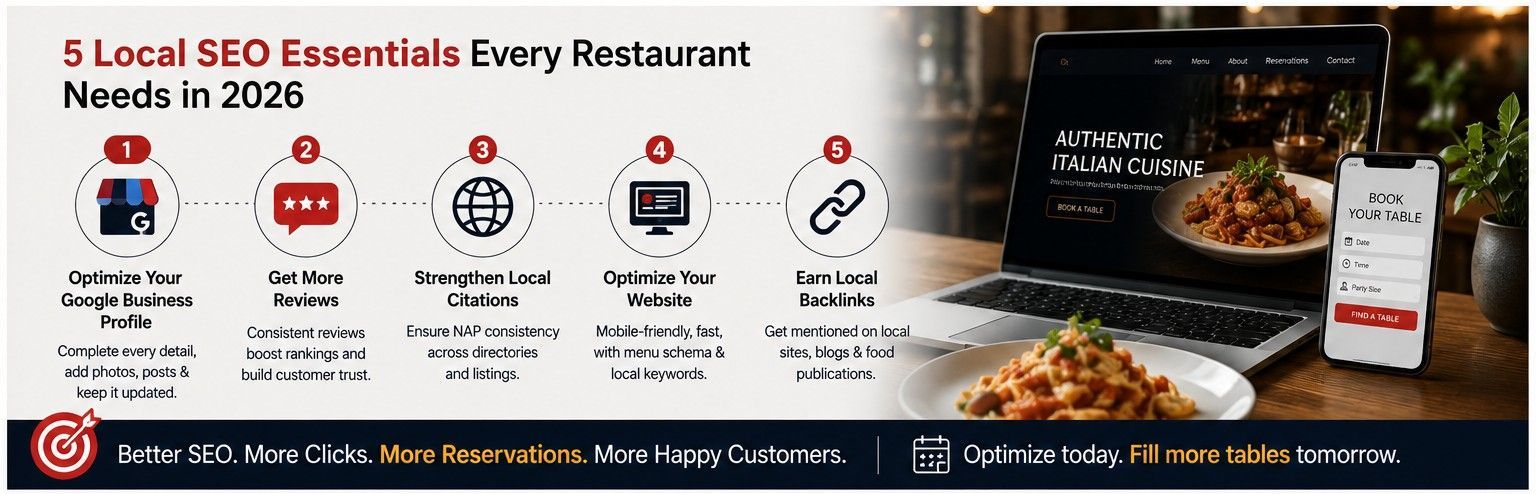
If there’s one thing to get right first, it’s your Google Business Profile. This controls your appearance in the "map pack"—the top three local listings that dominate mobile screens. Complete, active profiles get clicks; incomplete ones get scrolled past.
A winning profile requires complete details: accurate hours, contact info, menus, and service options. Because Google favors actively managed listings, letting yours sit stagnant hurts visibility. Regularly posting updates, adding fresh photos, and replying to reviews signals to Google that your business is active and relevant.
Photos drive action. High-quality listings receive significantly more direction requests and calls. Ensure your gallery includes clear exterior shots for navigation, interior photos to showcase the vibe, and high-quality food shots that entice diners to visit.
Reviews Are an SEO Signal, Not Just a Reputation Thing
Most restaurants think of reviews as something to watch, kind of handle it and occasionally answer, you know. But really, restaurant reviews are one of the main signals Google uses to decide where you should show up. The number of reviews, how recently people talked about you, and the general star score they give, all of that goes straight into local search rankings.
Getting a steady stream of reviews doesn't require being pushy about it. A simple follow-up message after a reservation, a small card on the table with a QR code, or a reminder from staff at the end of a meal, any of these done consistently adds up over time. The other part of this that gets ignored is responding. Replying to every review, good or bad, shows Google you're engaged and gives potential customers a sense of how you treat people.
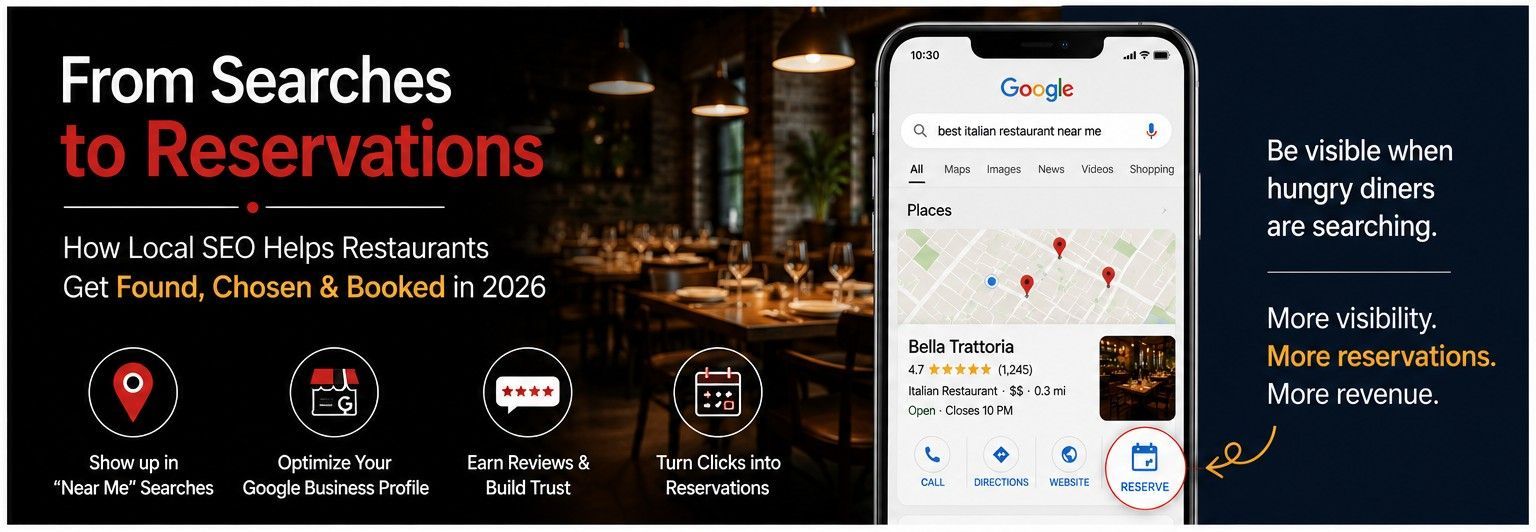
Tired of being scrolled past on Google Maps?
Let our team optimize your profile to get your restaurant into the coveted top three local spots.
Your Website Needs to Actually Work for Local Dining Searches
While your Google Business Profile sparks interest, your website seals the deal. In 2026, a slow mobile site, a clunky PDF menu, or a confusing booking system will quietly cost you reservations every day.
To convert hungry searchers, optimize these three essentials:
- Menu Schema Markup: This backend code helps Google read your menu properly, linking your site directly to relevant food searches.
- Natural Location Keywords: Weave your city and cuisine into your text naturally (e.g., "Our Bournemouth seafood restaurant"). This signals your exact relevance to local searchers without looking spammy.
- Instant Mobile Speed: Most dining searches happen on the move. If your site takes more than a couple of seconds to load, potential diners will click away to a competitor.
Local Citations and Backlinks Still Matter
Local citations are anywhere your restaurant's name, address, and phone number appear online- directories, food guides, and local listings. Consistency matters here. If your address is listed slightly differently across different platforms, it creates noise in Google's understanding of your business. Get the details identical everywhere.
Restaurant backlinks from local sources carry real weight. A mention in a local food blog, a feature in a neighbourhood guide, or a write-up on a community website all tell Google that real people and real publications are talking about your restaurant. This kind of restaurant local SEO work takes time, but it builds authority that's hard to replicate with shortcuts.
SEO vs Ads: A Question Worth Answering Properly
Restaurants often ask whether they should put money into SEO or into paid ads. The honest answer is they do different things. Ads put you at the top of results immediately, but stop the moment you stop paying. Local restaurant marketing through SEO builds a presence that keeps working over time without requiring spending on every click.
For most local restaurants, the smarter play is to get the SEO foundations right first, including your Google Business Profile, reviews, website, and local citations, and then consider ads to accelerate things or push a specific offer. A well-run restaurant SEO services strategy also means you're building something that keeps delivering even on the days you're not actively marketing.
Conclusion
The restaurants filling seats in 2026 aren't necessarily those with the biggest budgets or flashiest social media. Usually, they are simply the ones that show up when a nearby diner searches for exactly what they crave. Local SEO for restaurants makes this happen through a fully optimized Google Business Profile, steady reviews, and a high-performing website.
At Red Minstrel Marketing, we focus on driving results you can measure and for restaurants, that means more reservations. To see where you stand, start with an honest look at what pops up when you search for your cuisine in your local area.
Ready to turn "near me" searches into Friday night reservations?
FAQs
What is restaurant local SEO?
In simple words, local SEO is how you appear in Google searches when someone nearby is looking for a place to eat. At Red Minstrel Marketing, we handle this by optimizing your Google Business Profile, building local citations, managing reviews, and ensuring your website is structured for Google to index effortlessly. Ultimately, it positions your restaurant directly in front of hungry customers the exact moment they are ready to dine out.
How can restaurants rank higher on Google?
Start with your Google Business Profile, make sure it's fully filled out, kept up to date, and actively managed. Build up your reviews consistently. Make sure your name, address, and phone number are identical across every online listing. Add proper menu schema markup to your website. These aren't complicated steps, but most restaurants either skip them or set them up once and walk away.
Does SEO help increase reservations?
Yes, directly. When your restaurant appears in map pack results and local search results for relevant keywords related to food, the people clicking through are already looking for a place to eat at that moment. That is so different from regular website visitor traffic. More local visibility has always resulted in more reservation inquiries, phone calls, or walk-ins of people who found you on Google.
How important are online reviews for restaurants?
It is very important. Having a restaurant review can affect your Google ranking, and if that person chooses you over the competitor when they do find you. For local ranking signals, Google analyzes the volume of reviews, their ratings and how recent they are. In almost all cases, a restaurant that has 200 reviews and a score of 4.6 will outrank another comparable restaurant which only has 20 reviews.
Should restaurants invest in SEO or ads?
They both have their purpose, but they act in different ways. A restaurant seo agency will construct long-term visibility that builds up interest over time. Ads provide you with temporary visibility that ends once the budget does so too. If you are an independent restaurant, the prudent thing to think first in the paid ad ladder is to get your SEO house in order and then add the paid ads layer once that organic base has been established.
Author Bio :
Red Minstrel Marketing, helping businesses improve their online presence through results-focused strategies. Our expertise spans SEO, website development, local marketing, social media, advertising, and AI-powered marketing solutions designed to drive visibility, qualified leads, and business growth.
Related Post


