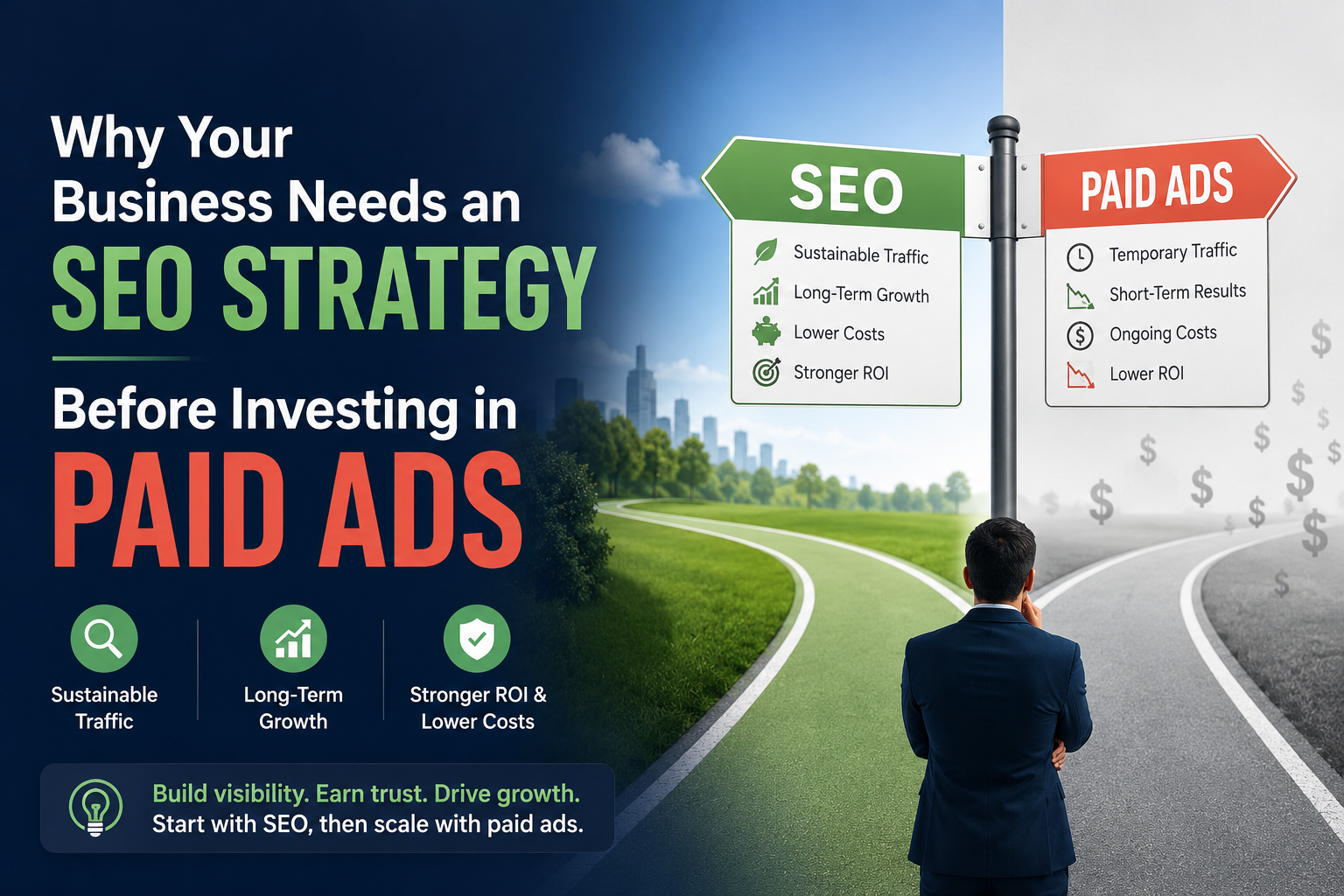
Every year, countless business owners launch a new website and pour most of their marketing budget into paid advertising, expecting instant results. They invest in Google Ads and social media campaigns, enjoy a short burst of traffic, and then watch it disappear as soon as the budget runs out. Without a solid SEO strategy, they're left paying for every visitor with little long-term return.
At Red Minstrel Marketing, we see this happen all the time. While paid ads can accelerate growth, they don't build lasting online visibility. If your website has slow load times, poor navigation, or weak content, those paid clicks rarely convert. A strong SEO strategy creates the foundation your business needs by improving your website, attracting organic traffic, and helping every advertising dollar deliver better results.
Let's explore why building your SEO foundation before investing in paid ads is the smarter path to sustainable business growth.
The True Cost of Relying Only on Paid Advertising
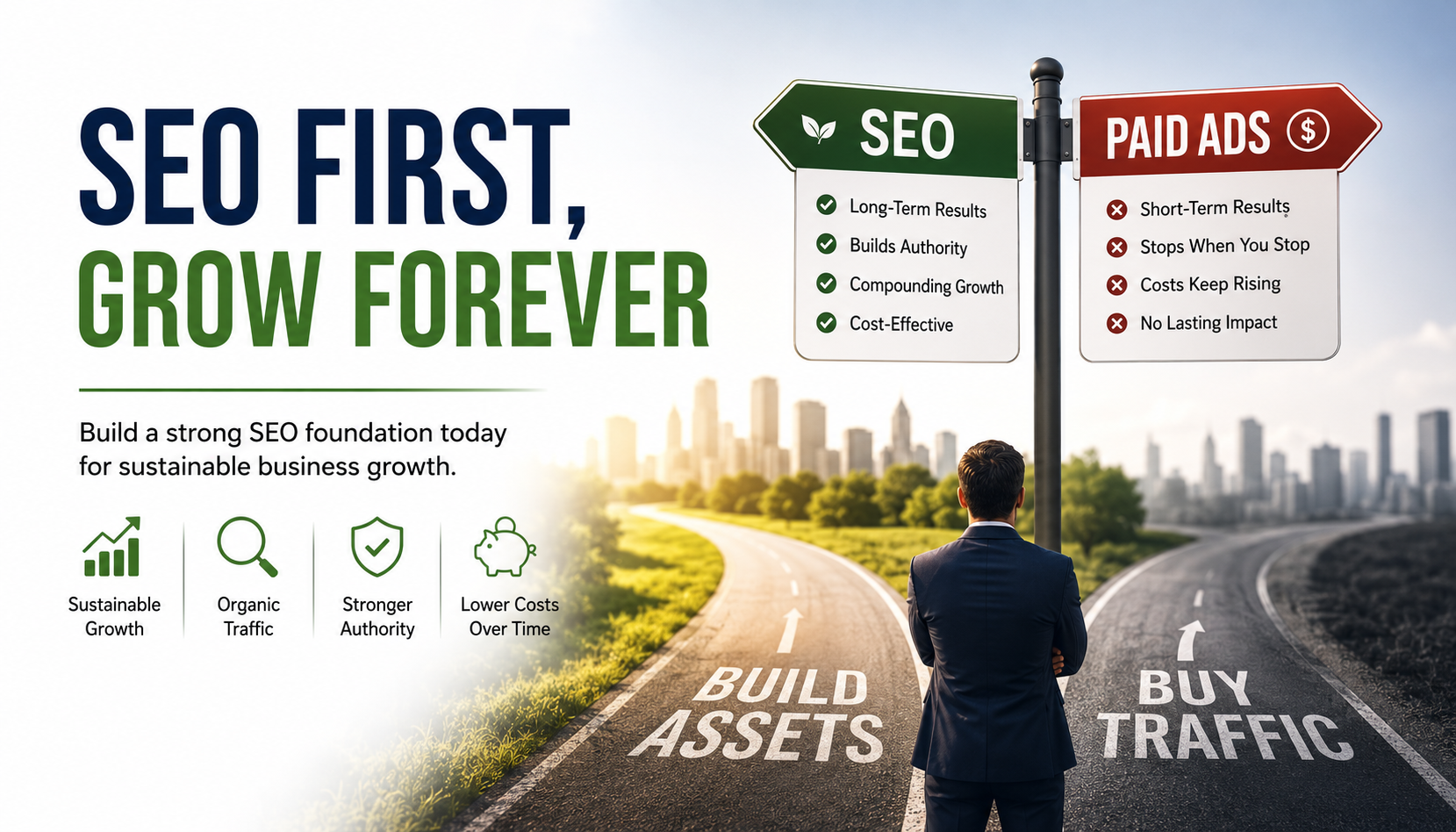
Paid ads give you instant gratification. You pay a specific fee, and Google places your link at the very top of the page for selected search phrases. But this relationship is purely transactional. The moment your credit card hits its monthly limit, or you turn off the campaign switcher, your brand disappears completely from the web search results. This creates a dangerous dependency where your business must continuously pay a premium tax just to maintain its online visibility.
A dedicated campaign centered around
search engine optimization builds a completely different asset for your brand. When you optimize your site architecture, fix backend bugs, and answer the questions your buyers are asking, you earn permanent real estate on the search engine results pages.
How Structural SEO Handles Your Paid Ad Spending
A lot of business owners don’t realize how their search engine rankings look and how their paid Google Ads perform are tied together in a deep way. Like, Google doesn’t just hand out the best ad spots to the highest bidder; it uses a more complicated sorting approach that it calls Quality Score, so it keeps searchers happy.
Unlocking Lower Costs with Technical SEO
A huge part of your Quality Score is determined after reviewing how well your destination website performs, as well as the user experience it provides. The ad network will punish you for slow page load speeds, messy site structures, or poor mobile responsiveness if your platform has those issues. That means they are going to start charging you much more per click in order for your ad to even show. By spending time improving technical SEO (i.e., reducing image sizes, cleaning out messy code blocks, repairing broken page links), you will reduce your ad costs overnight. This allows you to leverage your ad dollar further than the competition.
Driving Results with Smart Keyword Research
One of the best ways to spend a lot of money quickly is running an ad campaign without doing some deep, methodical keyword research. You end up paying for feed terms- the general, super-competitive search queries that drive a bunch of random web browsers instead of actual customers. If you can lean on specific SEO services to search your market for those exact long-tail searches in the beginning, you are mapping that shadow of immediate audience intent. It allows you to organize your paid ad groups around actionable search terms, so you can stay away from the pricey non-specific phrases that are simply a drain on your budget.
Before you invest more in paid ads, make sure your website is built to convert every click into a valuable opportunity.
The Compounding Value of Organic SEO Over Time
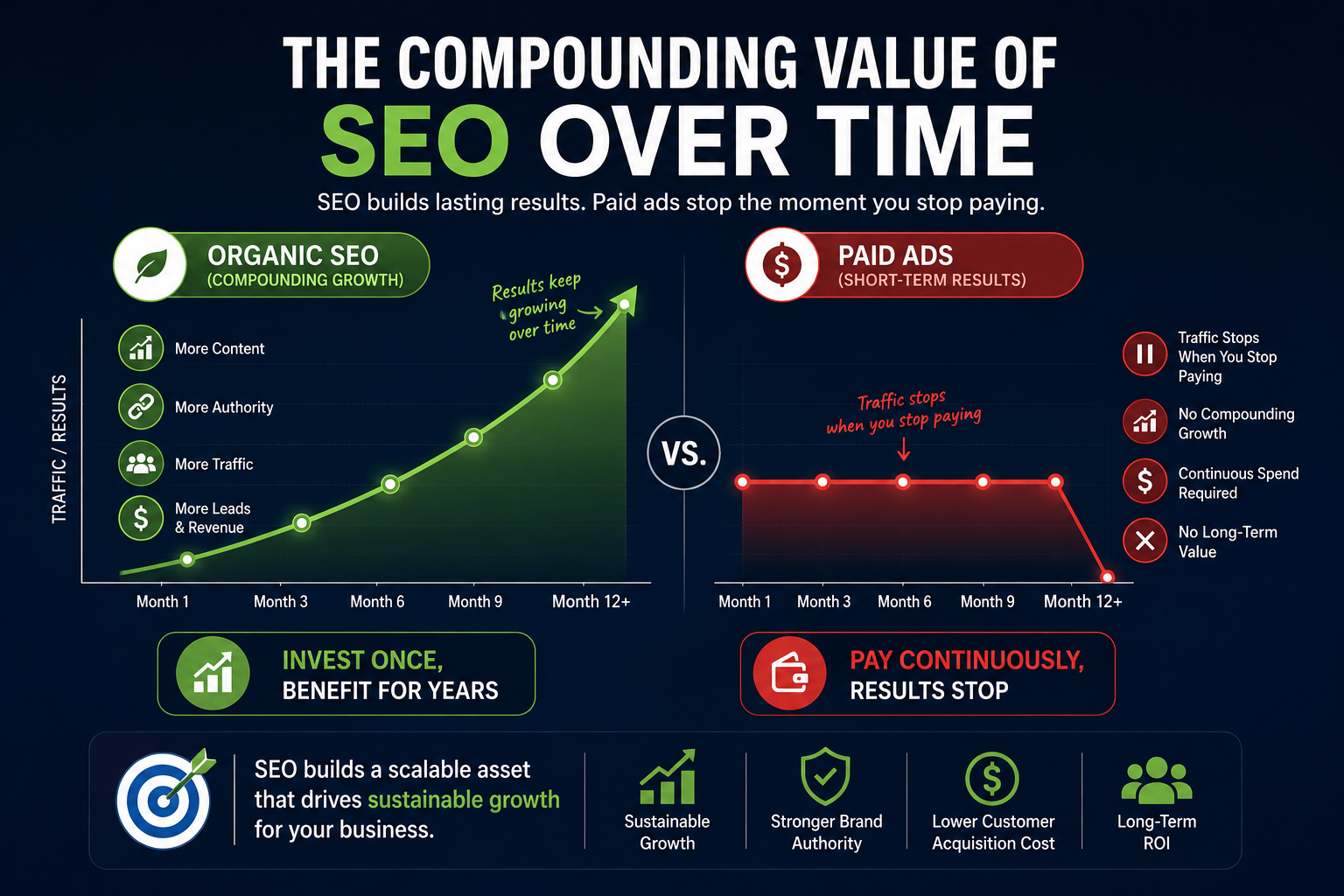
Paid advertising operates on a flat line. If you invest a thousand dollars this month, you get a set number of clicks. If you invest the same amount next month, you get the exact same volume of clicks. It never scales on its own; it requires constant financial fuel to stay alive.
A healthy organic SEO strategy scales exponentially over time. Great content, fixing metadata, building high-quality off-page SEO links throughout the web, and your overall site domain authority increase steadily. One cleverly written blog post can rank on page one of Google for years, bringing motivated visitors into your business time after time each month without cost.
As you continuously add more optimized pages and build up your web footprint, your traffic graph starts to curve upward. The work you do in month one keeps paying off in month twelve. This compounding effect creates a highly predictable marketing engine that takes the heavy pressure off your cash flow, allowing you to run paid ads as a tactical booster during peak seasons rather than using them as a desperate lifeline to keep your business afloat.
Why Long-Term Growth Requires a Strategic Partner
Trying to navigate the deep complexities of technical audits, on-page optimization, and content distribution can end up feeling like a full-time job. It's easy for an internal team to get stuck in technical jargon, or just burn valuable weeks chasing search algorithms that seem to change every single month.
That is exactly why working alongside a professional SEO services provider makes so much practical sense. True professionals don’t rely on generic templates or basic keyword stuffing hacks. They take the time to evaluate your exact technical structure, map out your competitive landscape, and construct a tailored growth framework that aligns perfectly with your revenue goals.
If your business is in a competitive, high-stakes market, partnering with a specialized team like a Toronto SEO agency gives you an instant operational advantage. They have knowledge of local competitive densities, regional search behaviors, and the specific industry benchmarks needed to help them out rank any other established brand.
Conclusion
At the end of the day, launching paid ad campaigns on a website that hasn’t been structurally optimized for search engines is an incredibly expensive gamble. Giving your business a comprehensive SEO strategy before you buy your first ad placement is the most sensible, sustainable way to build long-term digital authority and protect financial growth.
From managing your technical backend code to aligning your pages with high-intent keywords, setting up your digital foundation the right way makes all your future marketing work better. At Red Minstrel Marketing, we cut out the complex confusion of search engine optimization to make your online growth simple and predictable. We build highly effective organic frameworks designed to capture motivated buyers, maximize your website optimization, and unlock continuous lead generation without a never-ending ad bill.
Stop relying on short-term wins. Invest in SEO that delivers long-term growth.
Frequently Asked Questions
Should I invest in SEO or Google Ads first?
You should always lock down an organic SEO strategy before launching paid ad campaigns. At Red Minstrel Marketing, we use this specific approach to clean up your site speed and user experience first. This structural preparation directly lowers your paid ad costs and ensures that the expensive web traffic you buy actually converts into paying leads instead of bouncing away immediately.
How long does SEO take to show results?
A solid campaign usually needs around four to six months of steady optimization before you can see those meaningful measurable changes in your search rankings. It’s quite normal, because the search engine crawlers take time to index your newly added content, understand your backend technical repairs, and also confirm the quality of your outside link network.
What is technical SEO?
This is about making the backend structure and code of your website feel smoother, so search engine bots can easily crawl, comprehend, and then index your pages. A professional technical audit usually concentrates on raising your mobile load speeds, repairing any broken redirect loops, arranging your XML sitemaps properly, and putting in place clean data tags, so your overall user experience gets a better, more refined result.
Why is keyword research important?
This foundational practice reveals the specific phrases, questions, and search terms that your ideal target buyers type into Google day after day. If you know this data, you can build your website optimisation alongside real user intent and pull in that qualified organic traffic that developed throughout the intent to buy.
What is the difference between on-page SEO and off-page SEO?
On-page optimization is basically about tuning the elements right on your own site, like crafting clear headers, inserting relevant keywords, writing meta descriptions that make sense, and keeping the copy kind of easy to read. It’s the kind of thing you control day to day.
Off-page optimization, on the other hand, is about stuff happening outside your domain, more like building that credibility indirectly, such as collecting high-quality backlinks from reputable industry websites, and also handling local directory mentions, even when it’s a bit tedious.
Author Bio :
Red Minstrel Marketing, helping businesses improve their online presence through results-focused strategies. Our expertise spans SEO, website development, local marketing, social media, advertising, and AI-powered marketing solutions designed to drive visibility, qualified leads, and business growth.
Related Post